Beauty Calculator Pretty Scale
- 3.8
- Rating
- 1.00M
- Installs
- Free
- Price
 Analysis by App-foxy
Beauty Calculator Pretty Scale is the kind of beauty app that catches my attention quickly because it turns a familiar question—how balanced does my face look?—into something I can explore in a few taps. Developed by Firehawk, this free beauty app combines a face scale with a symmetry-focused calculator, so it feels more analytical than a typical selfie editor. I found the first session entertaining, but its lasting value depends on whether you treat the result as a visual reference rather than a final judgment about your appearance.
The app is available to everyone and runs on Android devices using version 6.0 or later. Its current version is 5.4.2, and it has passed the one-million-install mark, which suggests that the idea has broad appeal. The average rating sits at 3.9 from roughly 9,300 ratings, while the visible review count is 203. Those figures place it in an interesting middle ground: popular enough to be familiar, but not so universally loved that I would install it expecting a flawless experience.
What the first week feels like
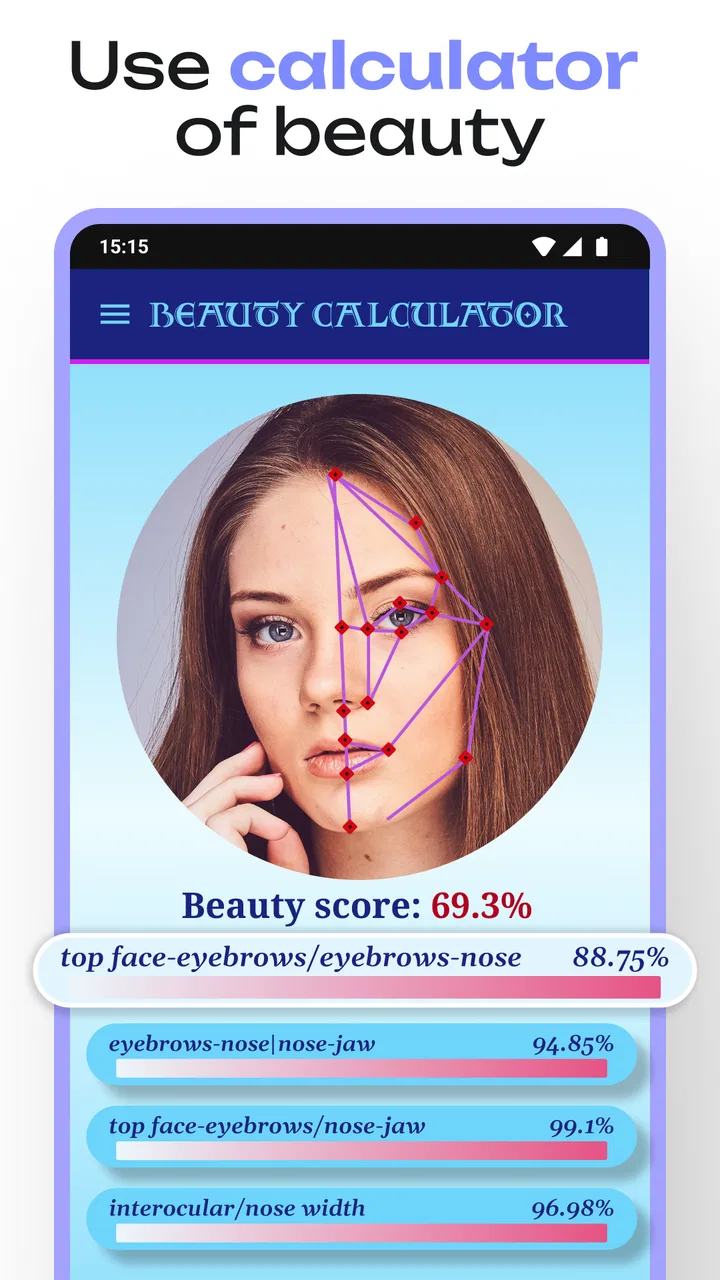
During the first week, the strongest part of Pretty Scale is the curiosity loop. I can take a face photo, see how the app interprets it, and compare the result with another image. That simple process makes the app easy to understand without a long tutorial. I do not need to learn a complicated editing system or spend time arranging filters. The appeal comes from the calculator itself and from seeing how small changes in a photo may affect the outcome.
You May Also Like

 Blood Strike: 2.5 Anniversary
Blood Strike’s Loadouts Turn Every Drop Into a Tactical Gamble
A close look at Blood Strike’s custom loadouts: how fast access to signature weapons reshapes its battle royale rhythm, rewards preparation, and narrows the gap between fights.

 Pandora - Music & Podcasts
Pandora’s Music Is Easy to Start, but Harder to Recover
Pandora’s strength is its low-effort path from a seed to a station. Its weak spot is how much confidence it asks you to place in connection, setup, and quiet recovery.

 8 Ball Pool
 Is Built on Rivalries, Rematches, and Routine
A close look at the rivalries, rematches, shared routines, and unanswered safety questions that turn a quick pool match into a persistent mobile community.

 Samsung Music
’s Quiet Strength Is Playing What You Already Own
Its reach comes less from spectacle than from dependable access to a personal library. That simplicity is both the app’s strongest retention engine and its ceiling.

 AccuWeather: Weather Radar
AccuWeather Review: A Quick, Clear Forecast for Everyday Decisions
For everyday plans, the best forecast is the one you can understand quickly. AccuWeather makes rain timing, radar, and local conditions easy to act on, with a few trade-offs.

 Hill Climb Racing
Why Hill Climb Racing Still Turns Crashes Into One More Run
A tiny car, a bumpy hill and one more upgrade: Hill Climb Racing keeps resurfacing because its simple chaos makes every near-miss feel personal.
More From Our News Desk
View All News


I would use it most naturally after taking a new profile picture, testing a passport-style image, or comparing two selfies taken under different conditions. The result can be useful for noticing how lighting, camera angle, facial expression, and distance from the phone influence an automated reading. That is a more practical way to approach the app than asking it to deliver an objective verdict on attractiveness.
One of my first useful discoveries with this type of tool is that the photo matters almost as much as the face being assessed. A tilted head, strong side lighting, a wide-angle front camera, or a smile can change the apparent balance of facial features. For a fairer comparison, I would keep the phone at eye level, face a soft light source, remove distracting shadows, and use a neutral expression. Taking several images under similar conditions is more informative than treating one score as definitive.
The symmetry element is especially easy to misunderstand. Facial symmetry is not the same as beauty, and a highly symmetrical image is not automatically more attractive, expressive, or natural. Pretty Scale is better viewed as a visual experiment that highlights proportions and balance in one captured image. The app can help me understand why two photos of the same person feel different, but it cannot replace human taste or account for personality, styling, expression, or context.
That distinction matters during the first week because novelty can encourage repeated checking. I might take a photo, adjust my angle, take another, and keep trying to improve the result. This is enjoyable for a short session, especially with friends, but I would avoid turning the number into a daily measure of self-worth. The calculator is most useful when it answers a specific question about a photo rather than when it becomes a constant source of reassurance.
Making the first results more useful
My preferred workflow is to create a small, controlled comparison. I would use the same room, similar lighting, the same camera distance, and a relaxed expression. Then I would compare one change at a time, such as a slightly different camera height or a more direct pose. This turns the app from a random score generator into a way to learn how presentation affects an image.
A second practical tip is to compare photographs taken for different purposes. A casual selfie, a professional headshot, and a social profile image do not need to produce the same visual impression. If the app gives different readings, that does not necessarily mean my face changed; it may simply reveal how strongly the capture conditions influence the analysis. This is one of the more valuable lessons I took from using it.
The app is also easy to share as a light conversation starter, but I would be selective about showing results to other people. Beauty scores can be interpreted more seriously than intended, particularly by younger users. Since the content rating is Everyone, families may encounter it easily, and that makes responsible use more important. I would present the output as a playful estimate from a camera-based tool, not as a personal evaluation.
What remains useful after the novelty fades
After the first week, the central question becomes whether there is a reason to return. For me, the answer is conditional. Pretty Scale can keep some value if I am working on photographs, experimenting with presentation, or curious about how consistent my images look over time. It has less lasting appeal if I only want a one-time score and do not enjoy comparing photos or learning how capture choices affect the result.
The app works best as a quick checkpoint before using a picture elsewhere. For example, I might be choosing between several profile images and want to identify which one looks most balanced and composed. I would not let the calculator make the final decision, but it could add another perspective alongside my own judgment. I would still consider whether the photo looks friendly, clear, appropriate for the setting, and recognizably like me.
Another recurring use is tracking presentation rather than appearance. Someone preparing for video calls, online profiles, or occasional portraits could use the calculator to test camera placement and lighting. In that situation, the benefit comes from repeating a controlled process and learning what produces a comfortable image. The app is not replacing a photographer or a proper editing tool; it is providing a quick, accessible check before I settle on a photo.
That is also where Pretty Scale compares favorably with ordinary beauty filters. Filters are designed to change an image, often by smoothing skin, reshaping features, or altering color. This app is more focused on assessment, so it can encourage me to improve the photograph itself rather than immediately modifying my face. If I want creative retouching, a dedicated photo editor is the better choice. If I want a fast symmetry-oriented experiment, Pretty Scale is more directly suited to that task.
On the other hand, a conventional mirror or a trusted friend may be better for everyday decisions. A mirror shows how I look in motion and in real time, while another person can comment on expression and overall impression. Pretty Scale offers a numerical or calculated perspective, but that perspective is narrow. Its recurring value comes from the specific question I bring to it, not from an endless supply of new content.
Who can get real value from it
I think the app is a good fit for curious users who enjoy visual experiments and want a simple way to compare selfies. It may also suit someone preparing a profile photo who wants to test framing, lighting, and head position before choosing an image. Its low entry barrier helps: the app is free to install, although in-app purchases range from $0.99 to $99.99 per item, so I would pay attention to any purchase prompt rather than assuming every part of the experience is included at no cost.
The app is less appropriate for anyone seeking medical, cosmetic, or professional facial analysis. It should not guide decisions about surgery, skincare treatment, or mental health. It also is not the right pick for a user who wants advanced retouching, detailed photography controls, or a carefully calibrated beauty consultation. Those needs call for a specialist service or a more capable editing application.
I would also advise skipping it if scores tend to affect your mood. The app’s central concept can be fun, but it naturally invites comparison and repeated checking. If a result makes you feel worse rather than more informed, the practical value disappears. In that case, a simple camera app or a manual photo-selection process would be healthier and more useful.
The maintenance burden of keeping it useful
Pretty Scale does not demand a complicated routine, but it does require discipline if I want meaningful comparisons. The maintenance is mostly on the user: consistent lighting, similar framing, a clean camera lens, and realistic expectations. Without those habits, month-to-month results become difficult to interpret because I may be comparing the environment more than the face.
I would not open it every day. A better rhythm is to use it when I have a real image-selection task or when I am testing a specific change in presentation. That keeps the app from becoming a repetitive score check. It also protects the novelty that makes the tool enjoyable in the first place.
Storage and organization can become a small source of friction if I take many comparison photos. I would keep only the images that teach me something, such as a clear difference caused by lighting or camera height, and remove the rest. This makes the process less cluttered and prevents a long collection of nearly identical selfies from becoming the main experience.
There is also a maintenance issue around expectations. Facial analysis tools can appear precise because they produce a clear result, but a clear result is not necessarily a reliable measurement of personal beauty. I have to remind myself that the output belongs to one image captured under one set of conditions. Treating it as a trend indicator for photography is reasonable; treating it as a permanent label is not.
Because the developer is Firehawk and the app has continued to receive a current version, I would keep it updated through the normal app store process. Updates can matter for compatibility and general reliability, particularly on older Android phones. The minimum operating-system requirement of Android 6.0 or later keeps the app accessible to a wide range of devices, though the actual comfort of use will still depend on the phone’s camera and screen.
Where friction begins to show
The biggest limitation is the narrowness of the analysis. A face calculator can examine the visual information available in a photograph, but it cannot understand the complete reasons one image works better than another. It may not reflect charisma, personal style, expression, or how naturally I feel in front of the camera. That makes the result interesting, but not sufficient for a final decision.
Lighting and camera hardware are another source of inconsistency. Two phones may process faces differently, and a front-facing camera can distort proportions when held too close. Even on the same device, a change in distance can alter the image. I would therefore avoid comparing my result with someone else’s as if both readings came from identical conditions.
There is a psychological limitation too. The app’s premise encourages the idea that attractiveness can be reduced to a calculation. That framing may appeal to users who like numbers, but it can also make ordinary variation feel like a problem to solve. I appreciate the app more when I use it to understand photographs and less when I use it to rank myself.
The commercial model may also affect the experience. Since optional purchases can reach a high amount per item, I would review each purchase screen carefully and avoid tapping through automatically. A free download is helpful for trying the concept, but it does not mean every possible feature or enhancement should be treated as part of the basic experience.
Finally, the app can become repetitive. Once I have learned that direct lighting, a steady camera, and a relaxed expression produce more consistent comparisons, repeated sessions may offer little new information. That is not a failure for a small utility, but it does limit its long-term role. I would not expect it to replace a broader beauty, photography, or editing toolkit.
Does it earn lasting space?
My long-term opinion is positive but measured. Beauty Calculator Pretty Scale earns a place on my phone if I want a lightweight way to examine facial balance in photos and test how presentation changes the result. It is approachable, free to try, available to a broad range of Android users, and focused enough to explain its appeal immediately. The 3.9 average from around 9,300 ratings reflects that mixed character: interesting and useful for some people, but not a universal everyday essential.
I would keep it for occasional profile-photo decisions, controlled selfie comparisons, or casual experiments with friends. I would not keep opening it merely to chase a better number. The app’s recurring value depends on using it as a photography aid rather than a judge of personal worth. That single change in mindset makes the experience more constructive and reduces the fatigue caused by constant comparison.
For someone who wants filters, skin correction, makeup effects, or professional portrait editing, another category of app will serve better. For someone who wants a quick symmetry and face-scale experiment without learning a complex tool, this one remains appealing. The trade-off is that its simplicity also limits depth, and its results should be interpreted with care.
My recommendation is to install it with a clear purpose, run a few controlled comparisons, and decide whether those experiments genuinely help you choose or improve photos. If they do, Pretty Scale can remain a handy occasional tool. If the score becomes the main reason to return, I would remove it and rely on a mirror, a normal camera, or feedback from someone I trust. Its lasting value comes from better photo awareness, not from turning appearance into a permanent number.
FAQs for Beauty Calculator Pretty Scale
01What is the Beauty Calculator Pretty Scale app?
The Beauty Calculator Pretty Scale app is designed to assess facial beauty by analyzing facial symmetry and proportions. Users upload a photo, and the app uses algorithms to provide a beauty score. It’s important to remember that beauty is subjective, and the app’s results should be taken lightly.
02How accurate is the beauty assessment provided by the app?
The accuracy of the beauty assessment by the Beauty Calculator Pretty Scale app depends on the quality of the photo and the positioning of facial features. It uses a mathematical approach to evaluate symmetry, but it cannot account for personal or cultural standards of beauty. Therefore, results may vary and should be viewed as entertainment.
03Is the Beauty Calculator Pretty Scale app safe to use?
Yes, the Beauty Calculator Pretty Scale app is generally safe to use. However, users should be cautious about privacy and ensure the app does not store photos without permission. Always check the app’s privacy policy to understand how your data is being used and shared.
04Are there any in-app purchases or advertisements?
The Beauty Calculator Pretty Scale app may include advertisements and offers in-app purchases to enhance the user experience. These could include removing ads or accessing additional features. Users should review these options carefully to decide if they are worth the investment.
05Can the app be used for all ages?
While the app is designed to be user-friendly and accessible, it’s best suited for older teens and adults due to the nature of the content. Parents should supervise younger users to ensure a healthy understanding of beauty standards and self-esteem. Always check the app’s age rating before downloading.
Pros
- Easy-to-use interface for quick assessments.
- Provides a numerical beauty score instantly.
- Fun and engaging for casual use.
- No personal information required for use.
- Includes tips for enhancing appearance.
Cons
- Subjective and lacks scientific basis.
- May promote unrealistic beauty standards.
- Limited features in the free version.
- Results can vary with different angles.
- No community or social sharing options.

Beauty Calculator Pretty Scale
Gallery